
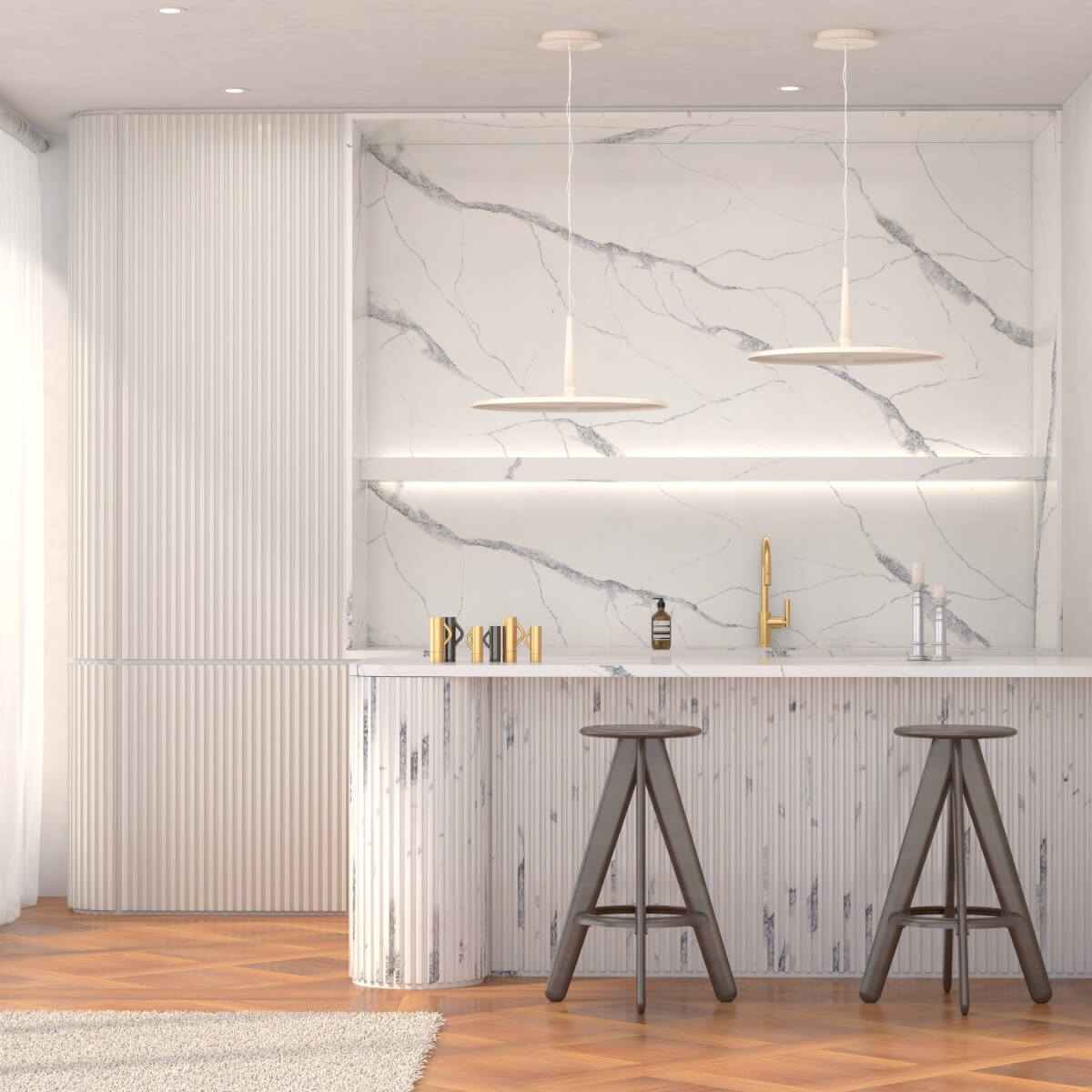
Is porcelain slab cheaper than quartz? Not always. Porcelain slabs and quartz-style benchtop materials can sit in a similar premium price range, depending on the slab, thickness, finish, fabrication, and installation. For homeowners building or renovating in Brisbane, porcelain can offer better long-term value because it is durable, low maintenance, stain resistant, and ideal for modern kitchen benchtops.
Why Do Homeowners Compare Porcelain and Quartz?
If you are building a new home or refreshing your kitchen, your benchtop is one of the most important design choices you will make. It affects how your kitchen looks, how easy it is to clean, and how well the space works for everyday cooking, family life, and entertaining.
Many homeowners compare porcelain slabs and quartz because both are known for their premium appearance. They can both create a clean, modern look and are often used for kitchen benchtops, island benches, splashbacks, bathroom vanities, and feature surfaces.
However, choosing the right benchtop material is not only about finding the cheapest slab. The final cost also depends on the size of your kitchen, the layout, the type of edge profile, the number of joins, cut-outs for sinks and cooktops, and the level of installation detail required.
For Brisbane homeowners, the comparison has also changed because traditional engineered stone and quartz-style benchtops are now affected by Australia’s engineered stone ban. As a result, many homeowners are looking more closely at porcelain slabs and silica-free stone options for their kitchen renovation.

What Is a Porcelain Slab?
A porcelain slab is a large-format surface made from refined natural minerals that are compressed and fired at very high temperatures. This process creates a dense, strong, and hard-wearing material that can be used across different areas of the home.
Porcelain is popular for kitchen benchtops because it offers a balance of beauty and practicality. It can replicate the look of marble, natural stone, concrete, travertine, and other premium finishes, while still being suitable for everyday use.
For homeowners who want a kitchen that looks elegant but is easy to maintain, porcelain is a strong option. It is stain resistant, and easy to clean, making it suitable for busy family kitchens and open-plan Brisbane homes.
What Is Quartz?
Quartz benchtops, often referred to as engineered quartz or engineered stone, were traditionally made by combining quartz minerals with resins, pigments, and other materials. They became popular because they offered a consistent colour range, smooth finish, and stone-like appearance.
In Australia, however, traditional engineered stone benchtops, panels, and slabs are now banned. This means homeowners are no longer comparing porcelain with old-style quartz in the same way. The more practical comparison today is often porcelain versus compliant silica-free stone, natural stone, laminate, timber, or other modern benchtop alternatives.
If you are planning a kitchen renovation, it is important to speak with a local stone supplier who understands which surface options are suitable, compliant, and available for your project.
Is Porcelain Slab Cheaper Than Quartz?
Porcelain slab is not always cheaper than quartz. In some cases, porcelain may be similar in price to quartz-style alternatives. In other cases, it may cost more, especially if you choose a premium porcelain slab with detailed veining, a marble-look design, a large-format size, or a more complex finish.
The cost of porcelain depends on several factors, including slab size, thickness, colour, finish, brand, design, edge profile, and installation requirements. A simple straight benchtop will usually cost less than a large kitchen island with waterfall ends, mitred edges, splashbacks, sink cut-outs, and cooktop cut-outs.
This is why it is better to compare the full installed cost rather than only looking at the slab price. A cheaper material may seem attractive upfront, but it may not always offer the same durability, maintenance benefits, or long-term value.

Installation Can Affect the Final Price
Fabrication and installation play a major role in the total cost of your benchtop. Porcelain is a strong material, but it needs to be handled, cut, and installed by experienced professionals.
If your kitchen design includes large slabs, detailed joins, waterfall panels, undermount sinks, or custom edge profiles, the installation cost may increase. This does not mean porcelain is of poor value. It simply means the quality of workmanship matters.
For homeowners in Brisbane, working with an experienced stone supplier and installer can help you achieve a cleaner finish and avoid issues with poor joins, weak edges, or incorrect support. A well-installed porcelain benchtop can make your kitchen feel more polished, modern, and complete.
Long-Term Value Matters More Than Upfront Price
When comparing porcelain slab and quartz, it is important to think beyond the initial cost. Your kitchen benchtop is something you will use every day, so long-term performance matters.
Porcelain is low maintenance and generally does not require sealing. It is also resistant to stains, scratches, and UV exposure. For homeowners who cook often, entertain guests, or want a surface that is easy to clean, these benefits can make porcelain a practical investment.
A lower-cost benchtop may save money at the beginning, but if it stains easily, marks quickly, or requires more maintenance, it may become less cost-effective over time. Porcelain can be a better-value option if you want a durable kitchen surface that continues to look good with less effort.
Why Porcelain Suits Brisbane Homes
Porcelain slabs are especially suitable for Brisbane homes because they work well with modern Queensland living. Many homes feature open-plan kitchens, alfresco areas, BBQ zones, and indoor-outdoor entertaining spaces.
Because porcelain is UV resistant and durable, it can be considered for both indoor kitchens and selected outdoor applications, depending on the product and installation requirements. This makes it a versatile option if you want a consistent look across your kitchen benchtop, splashback, bathroom vanity, laundry, or outdoor entertaining area.
Porcelain also comes in a wide range of colours, patterns, and finishes, making it easier to match your benchtop with your cabinetry, flooring, lighting, tapware, and overall home design.

When Porcelain May Be the Better Choice
Porcelain may be the better choice if you want a kitchen benchtop that looks premium, performs well, and is easy to maintain. It is especially appealing if you love the look of marble or natural stone but want a surface that is more practical for everyday use.
It can also be a smart choice if you are building or renovating and want an alternative to traditional engineered stone. For many homeowners, porcelain offers the right balance of style, durability, hygiene, and long-term performance.
Final Verdict: Is Porcelain Slab Cheaper Than Quartz?
So, is porcelain slab cheaper than quartz? Not always. Porcelain and quartz-style alternatives can sit in a similar price range, and the final cost will depend on your slab selection, kitchen layout, fabrication requirements, and installation details.
However, porcelain can offer excellent long-term value for homeowners who want a stylish, durable, low-maintenance, and stain resistant kitchen benchtop. It may not always be the cheapest choice upfront, but it can be a smart investment for a modern Brisbane home.
If you are building, renovating, or refreshing your kitchen benchtop in Brisbane, Real Stone Projects can help you explore porcelain slabs and silica-free stone options that suit your home, lifestyle, design goals, and budget.